Your Quick-Start Guide to Warehouse Clearance: Do This First to Re-Let Your Unit Faster
- Dave
- Mar 18
- 6 min read
The transition period between one commercial tenant exiting and another entering a property is a critical window for landlords and property managers. In the industrial sector, void periods represent a direct loss of revenue and can lead to increased security risks and building deterioration. To mitigate these risks, a swift and systematic approach to warehouse clearance is essential.
At InterDecs Maintenance, we understand that the speed at which a unit is returned to the market directly impacts the profitability of your portfolio. A warehouse that remains cluttered with the previous occupant’s remnants is not merely an eyesore; it is a barrier to new investment. This guide outlines the professional protocols required to clear, prepare, and re-let your industrial space with maximum efficiency.
The Financial Reality of Industrial Vacancy
Every day an industrial unit stands empty, the landlord incurs costs. Beyond the obvious loss of rental income, there are ongoing obligations such as business rates, insurance premiums, and utility standing charges. Furthermore, a vacant unit can quickly become a liability if it is not maintained to a high standard.
The primary objective of a warehouse clearance is to transform a "used" space back into a blank canvas. Potential tenants need to see the volume and potential of the building, not the debris of the previous business. By investing in a professional clearance and renovation strategy, property managers can significantly reduce void periods and often command higher rental yields due to the improved condition of the premises.
Step One: The Comprehensive Inventory Audit
Before a single item is moved, a thorough audit of the premises is required. This is the most critical step in the process. We recommend that landlords document the exact state of the unit upon the termination of a lease. This documentation serves two purposes: it provides a roadmap for the clearance team and creates a record for any potential dilapidations claims.
Categorising Abandoned Assets
Not all items left behind in a warehouse are waste. However, the legal responsibility for these items often falls upon the landlord. During the initial audit, we categorise items into three primary streams:
Residual Stock and Machinery: Items that may still hold value but must be removed to clear the floor space.
Fixtures and Fittings: Racking, mezzanine levels, and office partitions that may either be retained for the next tenant or removed to return the unit to its original configuration.
General Waste and Hazardous Materials: This includes everything from discarded packaging and broken pallets to more complex waste such as chemicals, oils, or electronic components.

Navigating the Legalities of Waste and Compliance
Industrial clearance is heavily regulated. Landlords must ensure that all waste removed from their property is handled by licensed carriers and disposed of at authorised facilities. Failure to comply with these regulations can lead to substantial fines and reputational damage.
At InterDecs Maintenance, we prioritise compliance and safety in every project. Our team is well-versed in the complexities of waste management legislation. We ensure that every item removed from a site is tracked and processed according to the highest environmental standards. For further information on our commitment to industry standards, you may read about how InterDecs achieves CHAS Elite compliance, which highlights our dedication to safety and professional excellence.
The Importance of Waste Transfer Notes
For every load of waste that leaves your property, a Waste Transfer Note (WTN) must be generated. This document provides a legal audit trail, proving that the waste has been handled responsibly. We provide our clients with comprehensive documentation for their records, ensuring they remain fully compliant with Environmental Agency requirements.
Distinguishing Between Clearance and Strip-Out
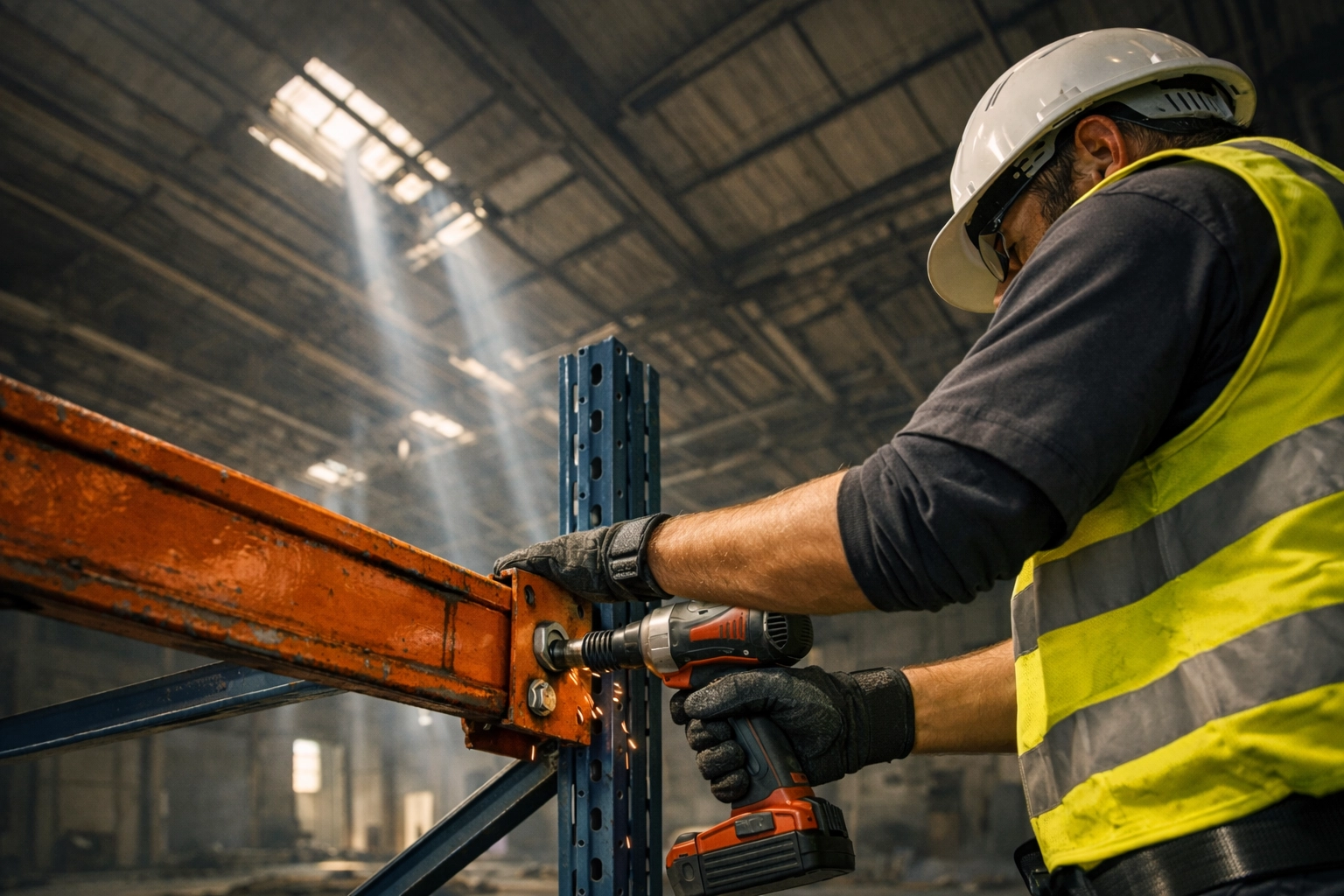
It is important for property managers to understand the distinction between a simple clearance and a full industrial strip-out. A clearance typically involves the removal of loose items, rubbish, and non-permanent fixtures. A strip-out is a more intensive process that involves the removal of internal structures to return the building to its "shell" state.
Deciding which service is required depends on the condition of the unit and the requirements of the incoming tenant. In many cases, removing old partitions and outdated racking is necessary to modernise the space. You can learn more about the technical differences by visiting our detailed post on the difference between demolition and strip-out.
Preparing the Shell: Post-Clearance Renovation
Once the warehouse is clear of debris and unwanted fixtures, the focus shifts to renovation. A clean, empty warehouse is a good start, but a professionally finished unit is what secures a lease. Our team at InterDecs Maintenance specialises in the aesthetic and functional restoration of industrial environments.
Industrial Floor Preparation and Coating
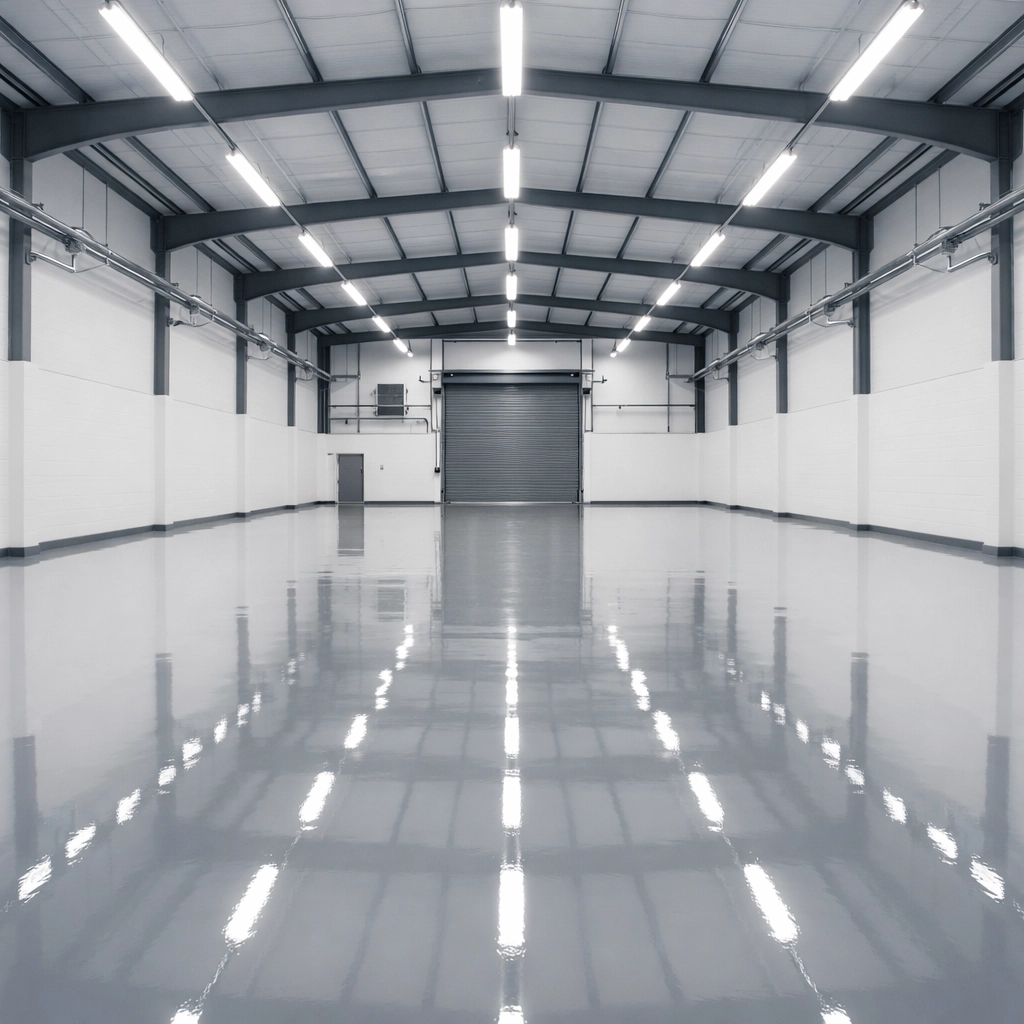
The floor is the most prominent feature of any warehouse. A stained, cracked, or dusty floor can deter high-quality tenants. Following a clearance, we often perform professional floor scrubbing and apply high-durability epoxy or polyurethane coatings.
These coatings do not only improve the appearance of the unit but also provide a dust-free environment and enhance the longevity of the concrete slab. A brightly coated floor also improves light reflection, making the entire space feel larger and more inviting during viewings.
Internal and External Redecoration
Walls and ceilings in industrial units often accumulate soot, dust, and grime over time. A professional deep clean followed by a fresh coat of high-reflectivity white paint can transform a dark, dingy warehouse into a modern facility. We also address the exterior of the property, ensuring that cladding is cleaned and any signage from previous tenants is professionally removed.
Our experienced decorators, such as Dan Partridge, bring a high level of craftsmanship to every industrial project, ensuring the finish meets the exacting standards expected by modern businesses.
The InterDecs Advantage: Speed and Reliability
Why do leading property managers and landlords choose InterDecs Maintenance for their warehouse clearance needs? The answer lies in our integrated approach. We do not simply remove rubbish; we manage the entire transition from a vacated unit to a market-ready asset.
By consolidating clearance, strip-out, and redecoration services, we eliminate the need for landlords to coordinate multiple contractors. This reduces administrative overhead and, more importantly, shortens the timeline between tenancies. Our leadership team, including experts like Andy, is dedicated to "kicking life back into industrial units" across the Midlands and beyond.
Safety and Risk Management
Industrial clearances involve significant risks, including the use of heavy machinery, working at height, and the handling of potentially hazardous materials. We manage these risks through rigorous site-specific risk assessments and method statements (RAMS).
Our staff are fully trained and equipped with the necessary Personal Protective Equipment (PPE) to carry out their duties safely. For landlords, this means peace of mind knowing that the work is being performed by a professional organisation that holds the highest levels of accreditation and insurance.
Maximising Value through Strategic Preparation
In a competitive commercial market, the "first impression" of a property is paramount. When a prospective tenant walks into a unit that is clean, well-lit, and professionally maintained, they can immediately envision their operations within that space.
Conversely, a unit that still contains the remnants of a previous business requires the tenant to look past the clutter, which introduces doubt and delays the decision-making process. By following a structured clearance and renovation guide, you are not just cleaning a building; you are actively marketing a premium business environment.
We encourage landlords to view the clearance process as an investment rather than a cost. The speed at which you can move a new tenant in: and the quality of that tenant: is directly related to the condition of the property at the point of viewing.
Conclusion and Professional Support
Efficient warehouse clearance is the cornerstone of successful industrial property management. By auditing inventory, ensuring legal compliance, and investing in high-quality remedial works, landlords can protect their assets and ensure a steady stream of rental income.
InterDecs Maintenance is your partner in commercial property excellence. We provide a full suite of landlord services designed to keep your portfolio performing at its best. From initial clearance to final redecoration, we offer the expertise and reliability required to navigate the challenges of the industrial sector.
If you have a unit that requires professional attention, we invite you to explore our range of services or contact our team directly to discuss your requirements.
Contact InterDecs Maintenance today:
Website:www.interdecs.com
Enquiries:Contact Us
Online Booking:Book a Consultation
We look forward to helping you return your property to the market with confidence and speed.

Comments